The best 3PL for an Amazon seller is the one that fits how you actually sell: what you send to FBA, what you ship yourself, and which other channels share the same inventory. In 2026 that decision got more important. Amazon stopped prepping and labeling inventory for U.S. FBA shipments, Amazon now sells its own supply chain services to every business, and FBA fees change again in 2027.
This guide explains the options, compares Amazon's own programs with an independent 3PL, gives a checklist for choosing a provider, and works through real costs. If you're ready to set up a workflow, see our 3PL for Amazon sellers page.
What changed for Amazon sellers
- Amazon no longer preps U.S. FBA inventory. Starting January 1, 2026, Amazon's prep and item-labeling services are no longer available for U.S. FBA shipments. Units must arrive at Amazon already prepped and labeled, by you or a prep provider. See our FNSKU labels guide.
- FBA fees change again in 2027. Amazon announced on November 5, 2026 that fulfillment fees will rise by an average of $0.19 per unit from January 15, 2027. The storage utilization surcharge ends on February 1, 2027, aged inventory moves to a single age-based storage rate, and the low-inventory-level fee will apply only below 28 days of supply. See inventory management.
- Amazon sells supply chain services to everyone. Amazon Supply Chain Services opened to all businesses in May 2026, so searching "Amazon 3PL" now returns Amazon's own services as well as independent providers.
Your options at a glance
FBA | AWD | MCF | FBM | Independent 3PL | |
|---|---|---|---|---|---|
What it is | Amazon stores and ships your Amazon orders | Amazon bulk storage that replenishes FBA | Amazon ships your orders from other channels | You ship your Amazon orders | A warehouse you contract with |
Who preps units | You or a prep provider | You or a prep provider | — | You | The 3PL |
Packaging | Amazon's | — | Unbranded by default | Yours | Yours |
Channels served | Amazon | Amazon (and some others) | Non-Amazon orders | Amazon | All channels |
Main limits | Capacity limits, storage and low-inventory fees | Eligibility and appointment rules | Size and weight limits | Your own labor and speed | Freight to FBA, integration setup |
Many sellers combine these. A common setup is FBA for Prime orders, a 3PL for reserve stock and prep, and FBM or other channels shipped from the same 3PL inventory. See FBA vs FBM.
Amazon Warehousing and Distribution (AWD) vs a 3PL
AWD is Amazon's bulk storage program. You send pallets or cartons to AWD, and it automatically replenishes your FBA inventory. Amazon describes it as a low-cost way to hold inventory upstream of FBA, and AWD pricing covers FBA inbound placement.
A 3PL does a similar job with different tradeoffs:
AWD | Independent 3PL | |
|---|---|---|
Replenishment to FBA | Automatic | Scheduled with you |
Prep and labeling | Not included; units must be prepped | Included as a service |
Product eligibility | Amazon's eligibility rules apply | Most products, after review |
Other channels | Limited | Shopify, Walmart, wholesale, and more |
Custom work | No | Kitting, bundles, relabeling, inspections |
Packaging | — | Your own packaging and inserts |
AWD can be cheaper to store bulk inventory that only sells on Amazon. A 3PL is more flexible: it preps, works with products AWD doesn't accept, and serves every channel from one stock pool. Compare current AWD fees in Seller Central with a 3PL quote for your actual SKUs before you choose.
Multi-Channel Fulfillment (MCF) vs a 3PL
MCF lets Amazon ship orders from your other channels, such as Shopify, using your FBA inventory. Amazon ships MCF orders in unbranded packaging by default, and very large or heavy items are excluded. MCF works well if most of your stock is already at FBA.
A 3PL is the better fit when you want your own branded packaging and inserts, need kitting or gift options, or want to keep FBA inventory reserved for Amazon orders. See Shopify fulfillment.
FBM and Seller Fulfilled Prime
With FBM, you ship Amazon orders yourself, or a 3PL ships them for you. Seller Fulfilled Prime (SFP) lets eligible sellers show the Prime badge on self-fulfilled orders after a trial period, as long as they meet Amazon's performance requirements for late shipments, valid tracking, and cancellations.
A 3PL can run your FBM operation, but no 3PL can guarantee SFP eligibility. That depends on meeting Amazon's requirements over time.
How to choose a 3PL for Amazon
Ask every provider these questions:
- Who creates the shipment plan and labels? You stay in control of Seller Central; the 3PL needs the plans and labels.
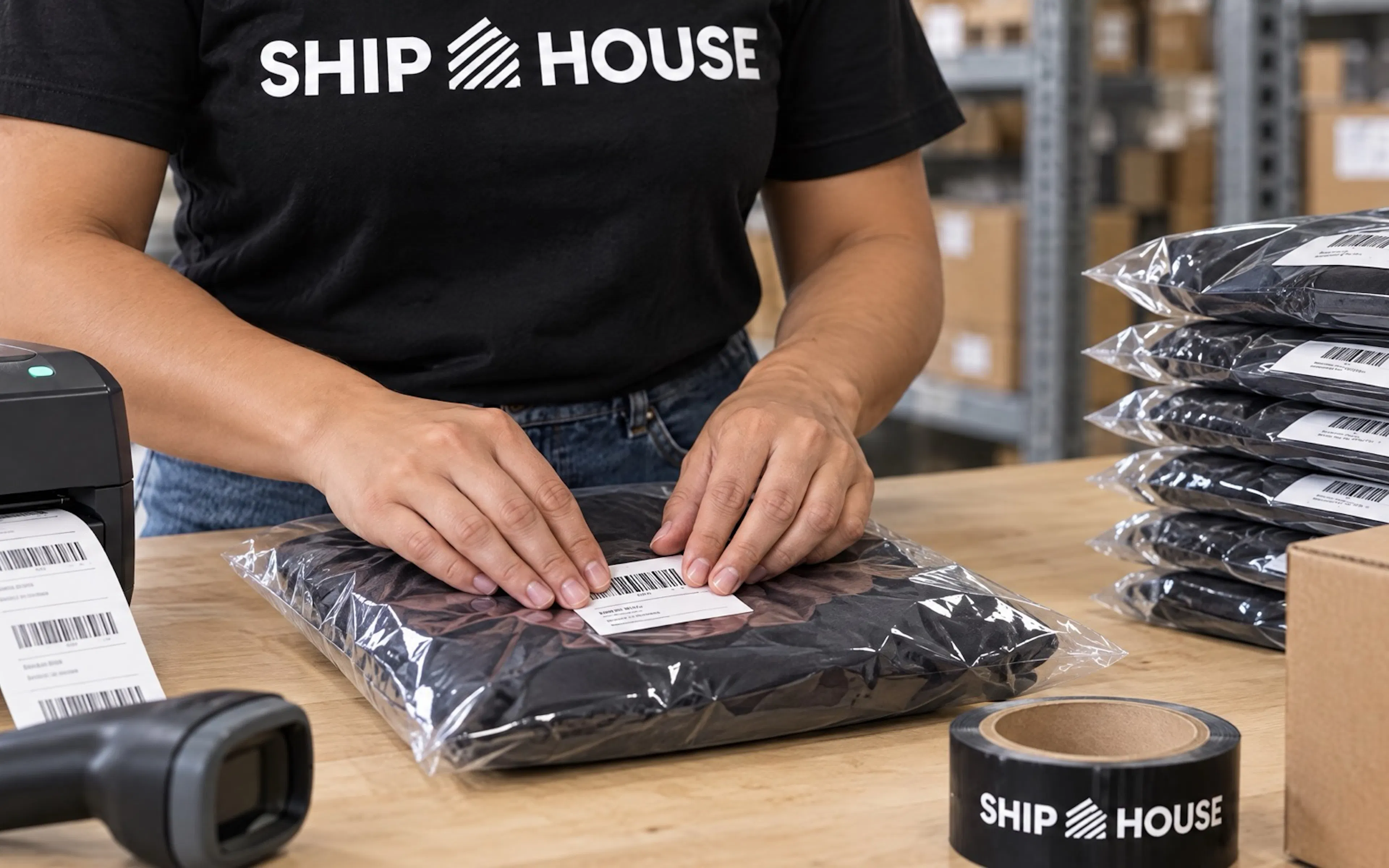
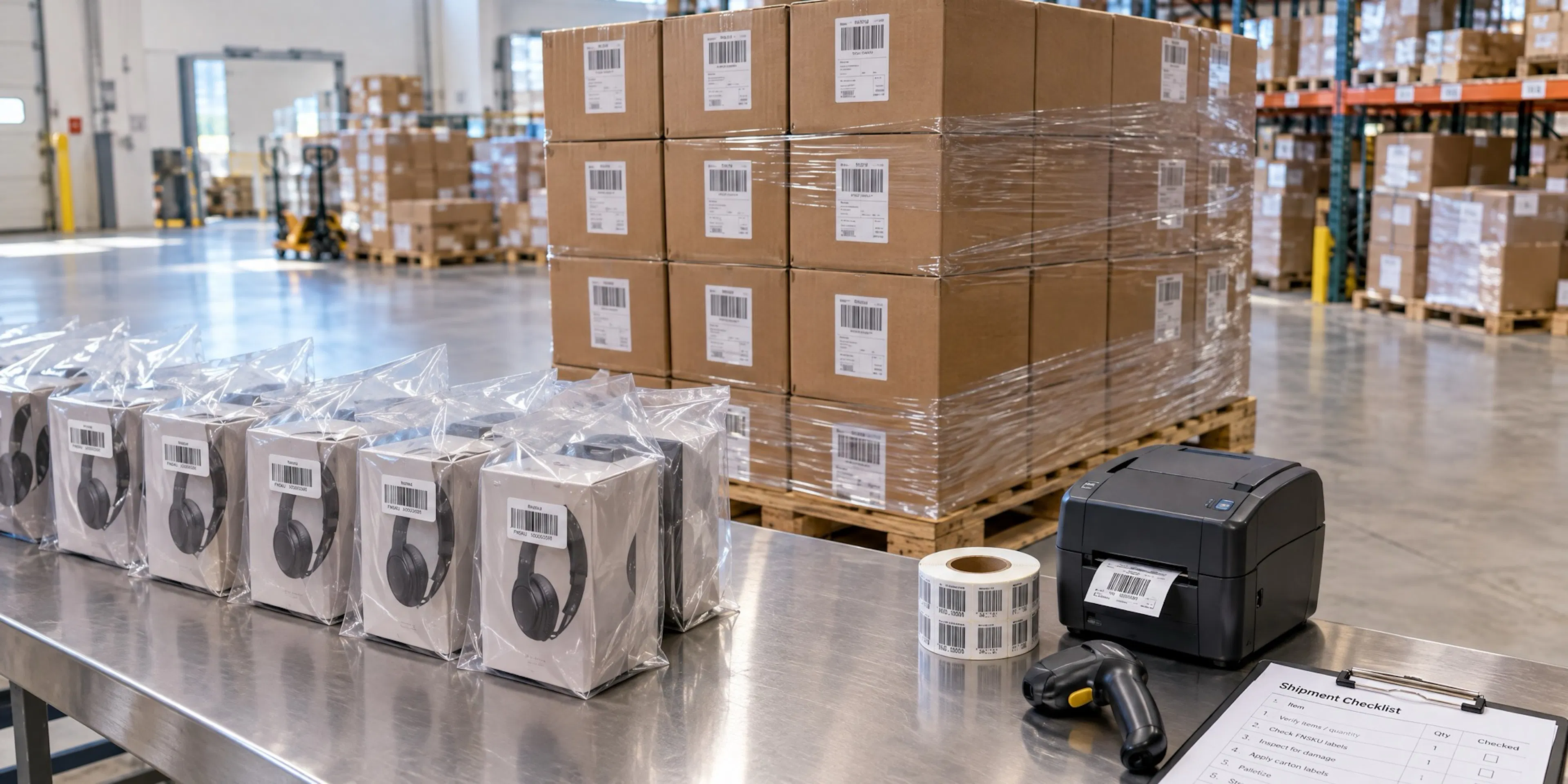
- What prep can they do? FNSKU labeling, poly and bubble bags, bundles, expiration-date labeling.
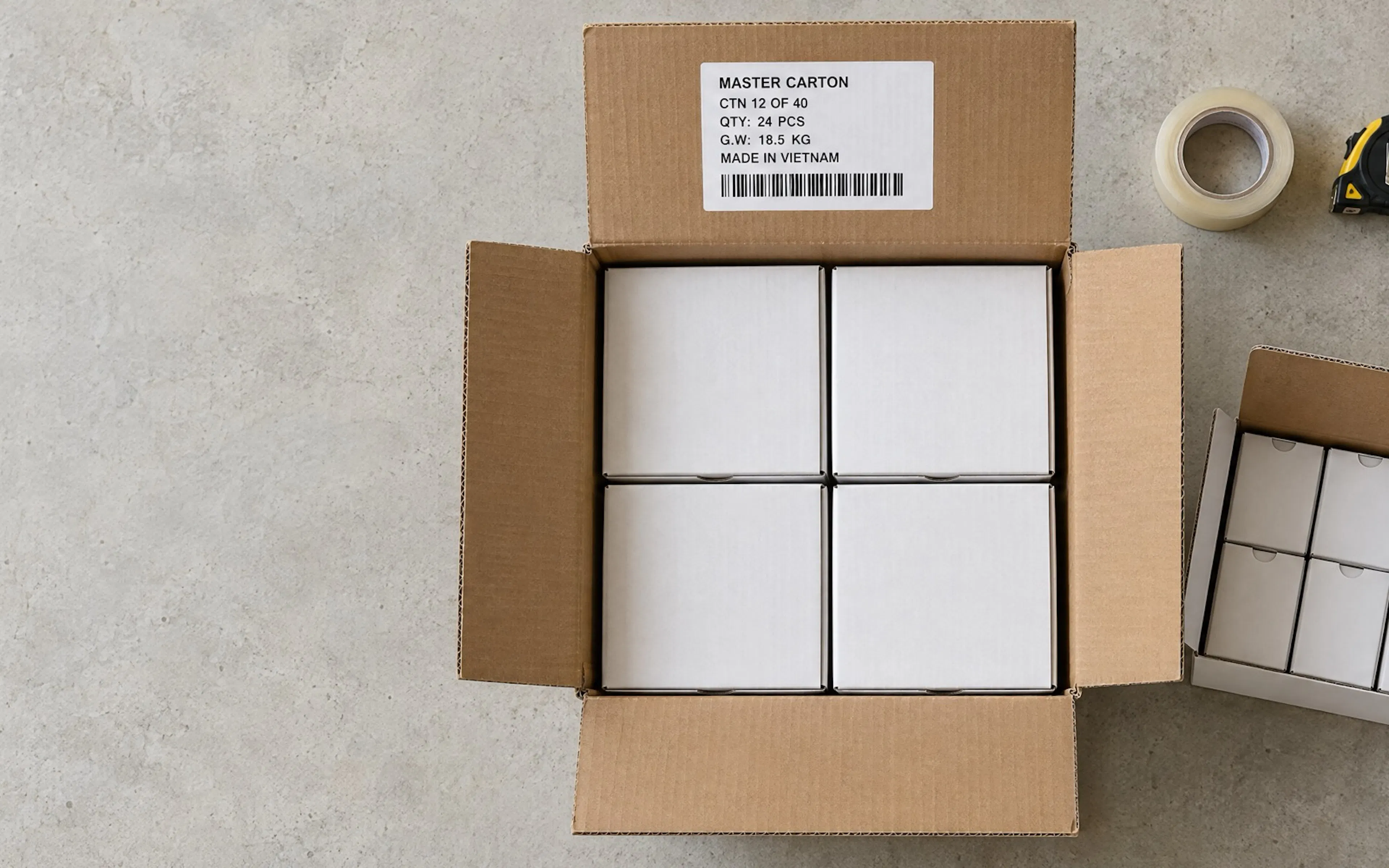
- Can they build compliant cartons and pallets? Ask about carton labeling and pallet requirements.
- How is receiving priced and how fast is it? Slow receiving delays replenishment.
- Do they handle FBM and other channels? One inventory pool avoids moving stock twice.
- How do they handle returns and removal orders? Inspection, relabeling, and restocking.
- Are prices published? Compare prep, storage, and order fees line by line.
- How are exceptions reported? Shortages, damage, and label problems should be reported before shipments leave.
- Where are they located? Proximity to your import port and to Amazon's fulfillment network shortens transit. See East Coast fulfillment.
- What about "Amazon-approved" claims? Amazon's Service Provider Network is a directory of third-party providers, and Amazon says it doesn't endorse any of them. Ask what a claim actually means.
What it costs: a worked example
Using ShipHouse's published starter rates:
Task | Calculation | Cost |
|---|---|---|
Prep 1,000 units (FNSKU label + poly bag) | 1,000 × ($0.40 + $1.00) | $1,400 |
Build 4 pallets of 20 cartons each | 4 × $30 + 80 × $1 | $200 |
Store 10 pallets of reserve stock | 10 × $40 | $400 / month |
Ship 300 FBM orders (1.5 items each) | 300 × $2.50 + 150 × $0.50 | $825 plus postage |
Standard receiving is free within a 4-labor-hour allowance per shipment. Published rates are estimates; final pricing depends on your products and volume. See pricing.
When you don't need a 3PL
A 3PL may not be worth it if you sell only on Amazon, have a small catalog that turns quickly, and can send prepped inventory straight from your supplier to FBA. The 2027 fee changes favor fast-turning inventory, so a lean FBA-only setup can work well for these sellers.
Frequently asked questions
Does Amazon still offer FBA prep in the U.S.?
No. Amazon's prep and item-labeling services ended for U.S. FBA shipments created on or after January 1, 2026. Units must arrive prepped and labeled.
What is Amazon Warehousing and Distribution (AWD)?
AWD is Amazon's bulk storage program. It holds inventory upstream and automatically replenishes your FBA stock.
Is AWD cheaper than a 3PL?
For bulk storage of products that only sell on Amazon, AWD can be cheaper. A 3PL adds prep, other channels, custom work, and your own packaging. Compare both for your SKUs.
What is Amazon MCF?
Multi-Channel Fulfillment lets Amazon ship orders from your other sales channels using your FBA inventory, in unbranded packaging by default.
Can a 3PL ship orders for Seller Fulfilled Prime?
A 3PL can fulfill your FBM orders, but SFP eligibility depends on meeting Amazon's performance requirements, so no 3PL can guarantee it.
Do I need a 3PL in Amazon's Service Provider Network?
No. The Service Provider Network is a directory, and Amazon doesn't endorse any provider. Evaluate any 3PL on its capabilities and track record.
How much does FBA prep cost at a 3PL?
At ShipHouse's published starter rates, FNSKU labeling is $0.40 per unit and poly or bubble bagging is $1.00 per unit. Bundles of two are $1.25.
What changes for FBA fees in 2027?
Fulfillment fees rise by an average of $0.19 per unit from January 15, 2027. The storage utilization surcharge ends February 1, 2027, and the low-inventory-level fee changes to a 28-days-of-supply rule.
Can one 3PL handle FBA, FBM, and Shopify?
Yes. A 3PL can prep and replenish FBA, ship FBM orders, and fulfill Shopify and other channel orders from the same inventory.
The bottom line
There's no single best 3PL for every Amazon seller. The right choice depends on how much you send to FBA, how much you ship yourself, and how many other channels you serve. Since Amazon stopped prepping U.S. inventory, a 3PL that preps, stores reserve stock, and ships every channel has become the default backbone for growing brands.
See how it works on our 3PL for Amazon sellers page, or tell us about your Amazon business.
Amazon program details come from Amazon's seller and developer documentation and fee announcements, current as of November 2026. Amazon changes its programs and fees often, so check Seller Central for the latest. ShipHouse is an independent 3PL and is not affiliated with Amazon.